[Computer Vision: Bubbles]
![[Computer Vision: Bubbles]](/content/images/size/w1200/2025/12/bubbles.jpg)
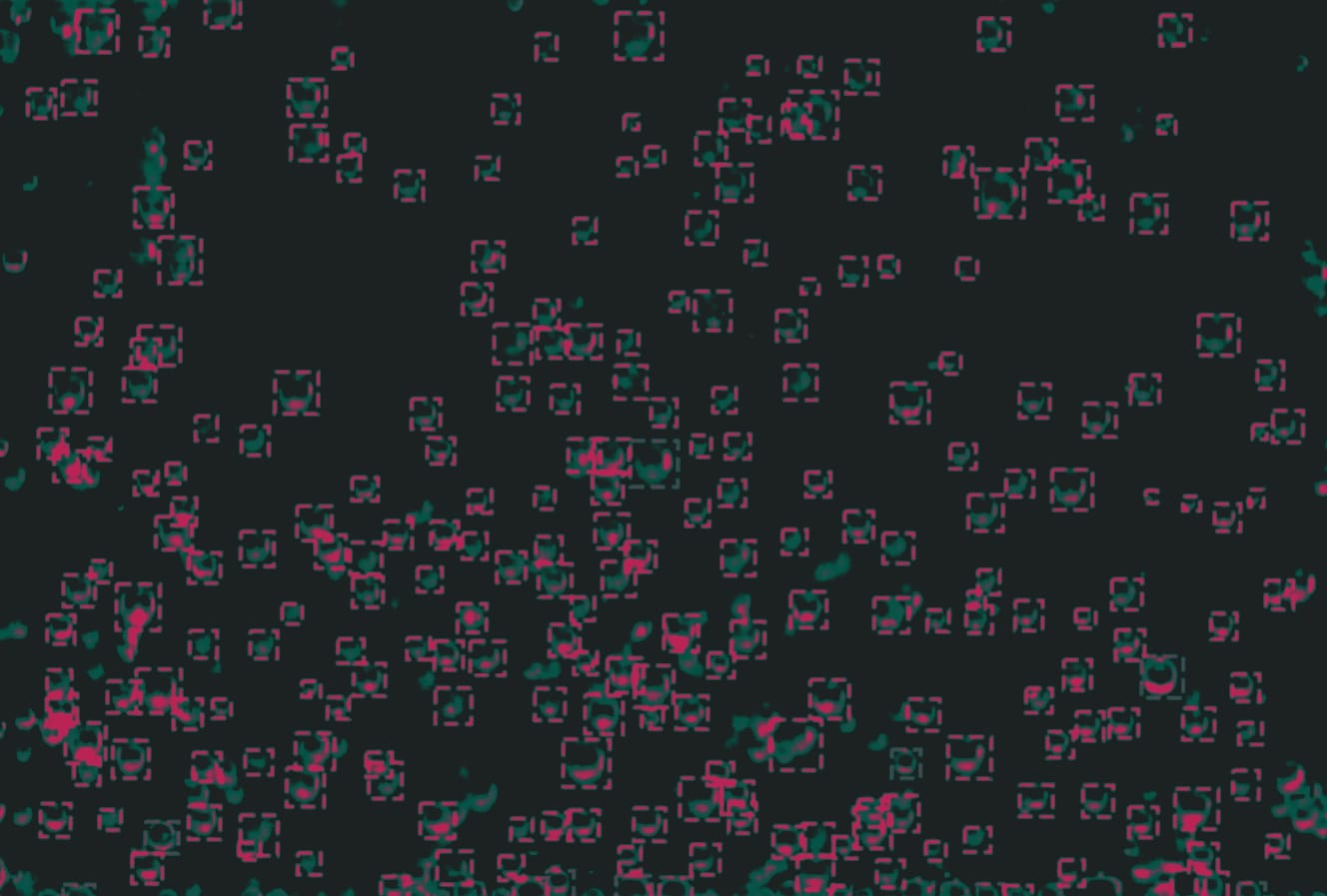
During my time at AVT Fluidverfahrenstechnik, I contributed to four publications focused on implementing Mask R-CNN for the detection of bubbles and droplets aswell as post-processing the data. These tools gave researchers the precise measurements required for detailed multiphase flow analysis.
Phase 1: Methodology & Optimization
For the initial two publications, I was tasked with developing a methodology to optimize the training process to generalize the model for diverse real-world use cases. I researched and selected relevant hyperparameters, preprocessing steps, and augmentation methods, running extensive parameter sweeps which yielded a final model with significantly improved detection performance. This made the system viable for accurate size measurements and the use in real-world settings. All of this is detailed in Part 2 of the Sibirtsev (2023) study.
Phase 2: Application in Electrolyzers
Following the development of the training methodology, I joined Jonas Görtz's team to adapt the model for a specific real-world application: parallel plate electrolyzers. Accurate measurements were critical to validate computer models of the chemical reactions.
I fine-tuned the model for this specific problem space, creating a new dataset from scratch and manually labeling the training images. The first paper, "Raising the Curtain," focused primarily on bubble size measurements. A new requirement was post-processing the results into usable data points. This involved filtering out low-accuracy detections and static bubbles adhering to the screen.
Phase 3: Velocity Tracking (PTV)
For the final paper, "Bubble Up," the objective shifted to inferring velocity and acceleration data exclusively through post-processing. To achieve this, I adapted a four-frame, forward-backward PTV algorithm that validates particle trajectories by projecting their paths into both preceding and subsequent frames. This sliding-window approach enforces strict consistency checks on position and bubble size, effectively filtering out noise. The result is a high-fidelity dataset of velocity and acceleration vectors, robust even in dense flow environments.
While the state of the art models may have since evolved with the field's rapid development, this work provided me with a foundational understanding of image detection pipelines. It allowed me to learn exactly how instance segmentation models (like Mask R-CNN and YOLO) function under the hood and how they can be applied to real-work applications.
Published Works
- Sibirtsev, S., Zhai, S., Neufang, M., Seiler, J., & Jupke, A. (2023). Mask R–CNN based droplet detection in liquid–liquid systems. Part 1: A proof of concept. Proceedings of International Solvent Extraction Conference (ISEC), 133-139.
- Sibirtsev, S., Zhai, S., Neufang, M., Seiler, J., & Jupke, A. (2023). Mask R-CNN based droplet detection in liquid–liquid systems, Part 2: Methodology for determining training and image processing parameter values improving droplet detection accuracy. Chemical Engineering Journal, 473, 144826. https://doi.org/10.1016/j.cej.2023.144826
- Görtz, J., Seiler, J., Kolmer, P., & Jupke, A. (2024). Raising the curtain: Bubble size measurement inside parallel plate electrolyzers. Chemical Engineering Science, 286, 119550. https://doi.org/10.1016/j.ces.2023.119550
- Görtz, J., Seiler, J., & Jupke, A. (2024). Bubble up: Tracking down the vertical velocity of oxygen bubbles in parallel plate electrolyzers using CNN. International Journal of Multiphase Flow, 177, 104849. https://doi.org/10.1016/j.ijmultiphaseflow.2024.104849